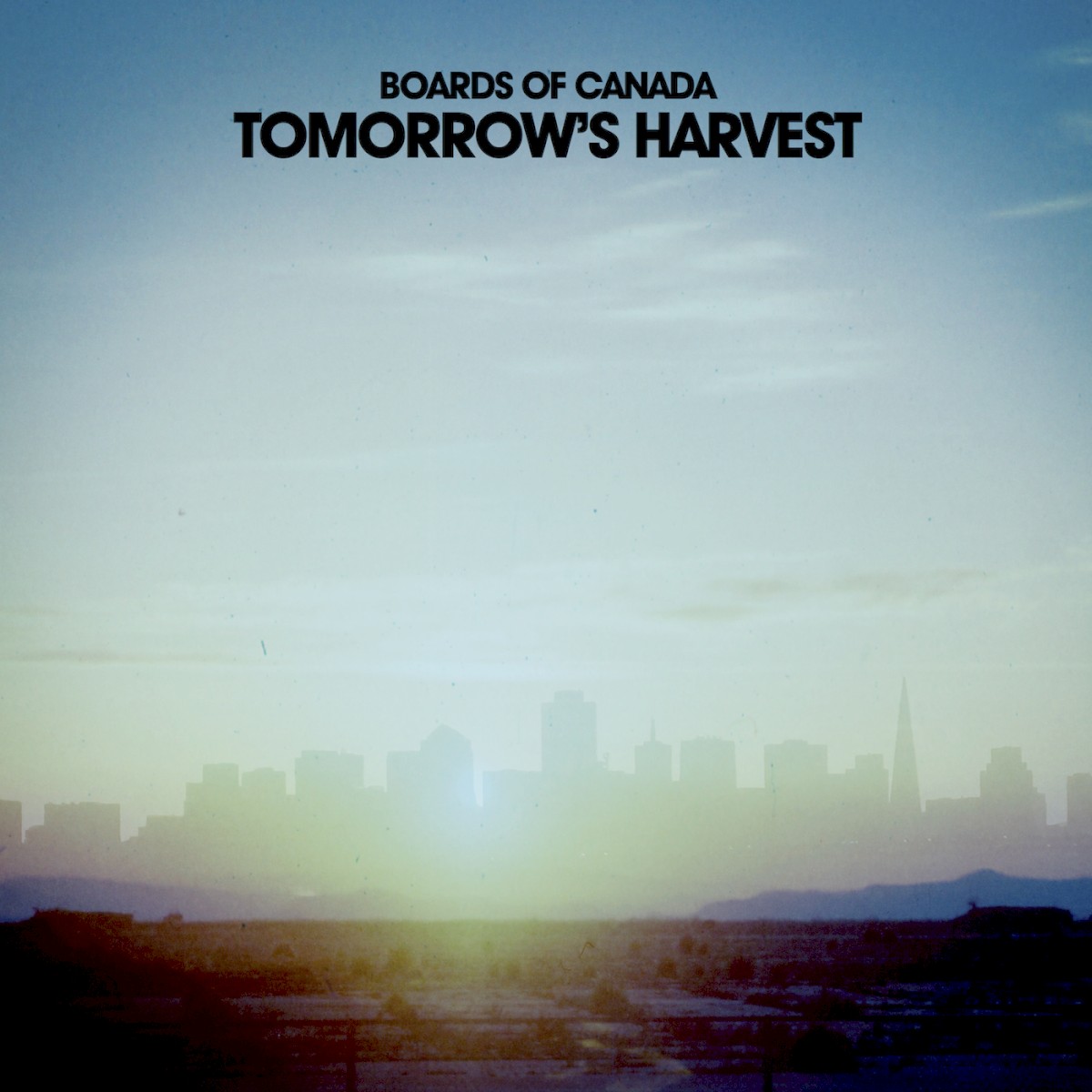
The easy line on Tomorrow’s Harvest is that it is Boards of Canada’s dark record, the one where the old hauntological fog gives way to full catastrophe. That is true in the most obvious sense and inadequate in every interesting one. What makes the album impressive is not simply that it sounds ominous, plenty of electronic records can manage that in an afternoon, but that its austerity holds. Over its length, the duo sustain a level of tension and depletion that ought, by rights, to become monotonous, and instead grows more persuasive. This is patient music, often withholding to the point of perversity, but it rewards that patience because the mood is not draped over the material like a concept. It is built into the way the tracks move, or refuse to move.
There is very little here that courts affection in the direct, melodic manner listeners often attach to Boards of Canada. If one comes looking for the woozy warmth and childlike disorientation that made earlier records so immediately inhabitable, one will find only remnants, and rather damaged ones. Yet that is the achievement. Tomorrow’s Harvest refines the group’s language by draining it of comfort. The result feels less like a set of compositions than a poisoned climate, an environment through which individual tracks pass as weather systems rather than songs. It is one of those records whose severity would seem to guarantee a narrow appeal, except that the severity is so rigorously imagined that it becomes engrossing.
Boards of Canada have always understood texture as argument. Here, they sharpen that understanding by paring away decorative incident and letting small shifts carry unusual weight. The synths on Tomorrow’s Harvest do not bloom so much as smear across the stereo field: grainy analogue tones, blunted at the edges, with the suggestion of signal decay built into them. Where a less disciplined act might use distortion as a sign for menace, Boards of Canada use it structurally. The fuzz, hiss and saturation are part of the music’s pressure system. They narrow the air around the tracks.
Take “Gemini”. Its pulse is almost procedural, the percussion clipped and insistent, but the real source of unease lies in the way the synth figure keeps circling without release. The loop does not develop towards revelation. It depletes itself in real time, becoming more anxious by remaining nearly the same. “Reach for the Dead”, one of the album’s more immediately legible pieces, works on a similar principle. A broad, elegiac chord pattern gives the impression that a payoff is coming. What arrives instead is a thickening of atmosphere, drums that push the track forward while the harmony seems to stand and stare. The tension comes from this mismatch between momentum and emotional stasis.
That pattern recurs across the record. Repetition is not employed in the club sense, as hypnosis through groove, nor in the minimalist sense, as a route to transcendence. It is more like attrition. “Cold Earth” drifts on a half-heard melodic fragment that never quite resolves into a theme one could hum later, while beneath it the beat lands with an oddly deadened force. “Sick Times” offers a sequence that, in another arrangement, might have suggested melancholy grandeur. Here it sounds corroded, as if the track were being replayed from a tape already stretched beyond tolerance. Even “Palace Posy”, with its muscular rhythm and relatively bright surface, feels less like relief than a system accelerating into danger.
Pacing matters as much as sonics. The album is sequenced to deny the listener easy peaks and troughs. The shorter pieces, “Telepath”, “Split Your Infinities”, “Uritual”, are not interludes in the usual sense, little atmospheric bridges inserted between larger statements. They function more like pressure changes. Their brevity interrupts the expectation of resolution and keeps the record from settling into a single tempo of dread. It would have been simple to make an unremittingly gloomy album. The more difficult feat is to make one whose mood remains unstable while its overall design stays coherent. Tomorrow’s Harvest manages this by controlling the rate at which information is released. Every track seems to withhold one obvious thing, a stronger melodic hook, a cleaner drum sound, a more emphatic climax.
The percussion deserves separate mention because it does much of the album’s emotional work. Boards of Canada are rarely discussed as rhythmic thinkers first, perhaps because their beats often serve atmosphere rather than display, but on this record the drums are decisive. They are dry, compact, sometimes almost military in their refusal of swing. The kick and snare patterns on “Jacquard Causeway” keep driving ahead while the synth lines above them fray into noise and unease, creating a useful friction between machine certainty and harmonic collapse. Elsewhere, beats arrive as hard facts inside softer, more ambiguous surroundings. You can hear the logic: if the melodies are to remain elusive, the rhythm must become the thing that pins the music in place.
This is why the record can survive its own narrowness. Conventional songcraft is largely absent. There are few standout tunes, few passages that announce themselves as the emotional centrepiece. A less exacting duo would simply drift. Boards of Canada instead produce tension by making each textural decision feel consequential, and by understanding that unease is often generated not through shock but through duration. The listener begins by noticing the sounds, then starts noticing what those sounds are refusing to do.
A Familiar Language, Stripped of Consolation
Placed within Boards of Canada’s catalogue, Tomorrow’s Harvest sounds less like a rupture than a severe edit. The hallmarks remain audible: the degraded analogue palette, the knack for melodies that seem remembered rather than written, the fascination with transmissions from an unreliable past. But the record trims away much of the pastoral softness and odd tenderness that made those elements emotionally generous elsewhere. If earlier work often held innocence and corruption in the same frame, this album gives corruption most of the space.
That matters because the group’s reputation can encourage a slightly lazy mode of listening. Boards of Canada are often praised for nostalgia, as if their principal gift were to summon wistful memories of educational films, childhood media and analogue decay. There was always more to them than that, and Tomorrow’s Harvest makes the point by becoming distinctly less hospitable. The old sense of memory as a blurred refuge is replaced by something colder, less personal and more environmental. The album suggests crisis, but in musical terms it does so by flattening affect, by leaving melodies half-buried, by making even its lushest moments seem contaminated. It is hard to sentimentalise a record this drained.
Within atmospheric electronic music more broadly, the album occupies an awkward, interesting position. It is too controlled and compositionally deliberate to be filed alongside ambient drift, and too indifferent to release and impact to satisfy the expectations attached to beat-driven electronica. Nor does it offer the grand, cinematic apocalypse that lesser records use to flatter the listener with borrowed significance. Boards of Canada avoid that trap by keeping things stubbornly local. The world of Tomorrow’s Harvest is made from timbre, repetition and sequencing, not from some overbearing programme. If one hears ecological dread, civilisational fatigue, technological exhaustion in these tracks, the reading is supported by the music’s depleted surfaces and grim propulsion. It is still a reading, not a thesis printed on the sleeve.
Accessibility, then, becomes the dividing line. This is not their most inviting album, and I doubt many listeners would choose it as an introduction unless they had a taste for controlled desolation. Its emotional range is also narrower than some admirers will care to admit. Boards of Canada have often been praised for ambiguity, but ambiguity is not the same thing as range. Here the ambiguity tends to serve one broad feeling: foreboding, sometimes elegiac, occasionally numb. Yet the narrowness is part of the formal ambition. The duo seem to have asked how far they could push their sound towards exhaustion without losing its identity. Quite far, as it turns out.

One could even argue that the album improves on repeated hearing precisely because it withholds the obvious pleasures. Records built on instant atmosphere often thin out quickly; once the setting is established, there is nothing left to discover. Tomorrow’s Harvest keeps disclosing small design choices, the way a bass tone sours a chord from below, the way a transition resets the emotional temperature, the way a melody is introduced as if from a distance and then denied the chance to come properly into focus. It can seem forbidding at first, and maybe a bit self-serious in places, but self-seriousness is a venial offence compared with vagueness.
The Cold Spell Holds
The lasting value of Tomorrow’s Harvest lies in how completely it commits to its own diminished world. Listeners wanting tunes they can carry away, or the sly emotional warmth that once made Boards of Canada so easy to mistake for mere nostalgists, may find it stubborn, even unrewarding. There are stretches where the album’s commitment to cumulative effect leaves individual tracks less distinct than they might be. A few pieces function primarily as tonal infrastructure, and if one is resistant to the overall atmosphere they can feel more dutiful than revelatory.
Still, that limitation is inseparable from the album’s strength. This record is for listeners who value sequence over extract, pressure over release, the slow consolidation of an idea over the immediate charm of a hook. Its conceptual unity, if that phrase has not been exhausted by overuse, is earned in sound. Boards of Canada do not tell you what to fear. They build a habitat in which dread becomes the default condition, and they do so with a craftsman’s restraint rather than a propagandist’s insistence.
That is why the album endures beyond first impressions of gloom. It turns atmosphere into form. Many records can imply a ruined future. Tomorrow’s Harvest makes one feel patiently, meticulously inhabited.