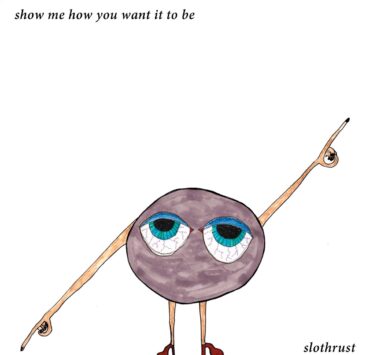
This album arrives with its own thesis taped to the front: happiness as a bad disguise, romance as a room with the lights slightly wrong, the loved girl as someone still performing injury for an audience that has become very good at recognising the costume. The phrase is almost too useful. It gives listeners an interpretive key before the first chorus has had a chance to earn one.
That is the first problem, and also the album’s most interesting pressure point. Olivia Rodrigo has always understood that a pop song is heard twice now: once as sound, once as evidence. A line becomes a caption, a bridge becomes a forensic site, a small tonal shift becomes proof of a new era. The title encourages the obvious reading, that this is an in-love record shadowed by dissatisfaction, irony or emotional drift. The question is whether that tension is actually audible, whether it changes the songs’ internal weather, or whether it mostly changes the story being told around them.
The answer is mixed, which is more useful than a clean coronation. Rodrigo is not suddenly a different writer because the palette has darkened or the perspective has become more self-conscious. Pop criticism loves this little ceremony: the confession becomes “meta”, the crush becomes “ambivalence”, the young woman becomes “mature”. Fine, but the speakers are less easily flattered. The record’s strongest passages do complicate her image, not by making her sadder or more tasteful, but by letting contradiction sit inside the melodic line rather than outside it as branding. Elsewhere, the album mistakes seriousness of posture for emotional complication, and you can hear the songs stiffen under the expectation that they must signify growth.
Rodrigo’s early gift was the velocity of accusation. On SOUR, and again through the most combustible parts of GUTS, she wrote as if the feeling had only just happened and the song was being assembled from the debris: the immaculate melodrama of “drivers license”, the pop-punk recoil of “good 4 u”, the self-mythologising bite of “vampire”, the jagged social x-ray of “all-american bitch”. Even when the writing was polished to a mirror finish, it kept the useful illusion of first contact. The wound was fresh, the punchline was already typed out, the chorus knew exactly where to hit.
Here, the real shift is not that Rodrigo has become darker. She was never exactly a picnic blanket. The shift is in how often she allows a thought to change direction before it resolves. The best writing on you seem pretty sad for a girl so in love is less interested in the slam-dunk line than in the micro-adjustment: an admission half-retracted, a joke that exposes the person telling it, a romantic scene that curdles because the narrator notices herself narrating it. Her wit remains, but it is less dependent on the old trick of turning humiliation into a meme-able blade. That is not a moral improvement. Meme-able blades have their uses. But it gives several songs a more unstable pulse, as if the singer is no longer fully convinced by her own most elegant explanations.
The danger is that restraint can become another kind of overstatement. Some of the album’s quieter writing feels withheld in the prestige-drama sense, where the lack of an obvious outburst is assumed to equal depth. Rodrigo is too skilled a melodist for the songs to collapse, but a few of them circle their own tasteful ambiguity without finding the unnerving particular. The page matters here. When she grounds a feeling in sequence, letting desire lead to embarrassment, embarrassment to resentment, resentment back to tenderness, the songs breathe. When she presents mixed feelings as a mood board, the result is solemn rather than complex.
This is where the record’s supposed maturity needs a more careful name. Rodrigo has not abandoned theatricality. She has redistributed it. The drama moves from the big vocal rupture to the smaller feint, from the scream at the end of the hallway to the pause before entering the room. That can be thrilling. It can also make you miss the old unruliness, not because rawness is inherently truer, but because Rodrigo’s precision has always needed some friction to avoid looking like a display case.
No Olivia Rodrigo album arrives naked. It comes already surrounded by the machinery of contemporary pop listening: fragments circulating ahead of full context, fans trained to map biography on to syntax, casual listeners half-aware of the narrative before they know the hooks. This is not a complaint. It is simply the delivery system. Rodrigo’s music has been exceptionally good at travelling through that system because it gives the algorithm clean emotional objects without sounding algorithmic in its construction. A bridge can be clipped. A lyric can be argued over. A look can become a theory. The songs still have to work when the phone is face down.
you seem pretty sad for a girl so in love seems designed to wobble between three modes: pop event, diaristic confession and bid for seriousness. It wants the intimacy of a notebook, the scale of a major release and the aftertaste of an artist refusing the obvious next move. That instability is not inherently cynical. In fact, it mirrors the central mood of the album, the sense of a person trying to be legible while resenting how legible she has become.
The problem is that the framing sometimes does work the music has not fully done. A title this pointed makes every minor-key turn feel like evidence of a grand emotional argument. A more self-aware lyric is quickly treated as a philosophical development. A less explosive chorus is filed under “subtlety”, even when it may only be less explosive. This is how pop prestige operates now: not through the old rockist demand that an artist pick up a guitar and bleed correctly, but through a newer insistence that self-consciousness automatically deepens confession.
Rodrigo is better than that reading. She is most persuasive when the songs resist the commentary they invite, when they behave like pop songs rather than application forms for seriousness. The hooks matter. The contour of the vocal matters. The way a phrase lands a fraction earlier than expected matters more than whether it can be turned into a discourse about post-fame intimacy by breakfast. Context changes the angle of listening, but it does not rewrite a weak line into a strong one. Here, it heightens the album’s unease, while also flattering some of its thinner moments.
Rodrigo has been saddled with revival talk since “good 4 u” made a generation of listeners rediscover, or pretend to rediscover, the pleasures of distorted adolescent velocity. The lazy version says she is bringing back pop-punk, or 90s alt-rock, or confessional singer-songwriter angst, as if styles sit in storage units waiting for a famous young person to open the door. The more precise version is less nostalgic and more interesting: Rodrigo uses older pop-rock and singer-songwriter forms as rhetorical technologies. They let a song switch registers quickly. They make sweetness and aggression share a chorus. They give embarrassment a tempo.
On this album, the familiar templates function best when they are treated as tools rather than proof of authenticity. A crunchy guitar does not make a feeling less manufactured. A stripped arrangement does not automatically put us closer to the truth. Rodrigo seems to know this, most of the time. Her relationship to rock vocabulary has never been reverent. She likes its theatrical permissions: the stomp, the sneer, the sudden dynamic drop, the bridge that behaves as if the song has briefly lost its mind. When those devices are folded into clean pop architecture, they still feel alive.

The weaker moments are the ones that use received textures as emotional shorthand. A shadowed chord progression, a deliberately scuffed vocal edge, a production choice that signals “diary” rather than discovers one: these are not sins, but they are not revelations either. The album does not need to be rescued from polish. Rodrigo’s polish is part of her intelligence, the thing that allows messy feeling to become communal without turning into sludge. The more relevant question is whether the borrowed forms generate movement. At its best, the record uses pop-rock pressure to make love feel like an argument with the self. At its least convincing, it uses the same pressure to announce that an argument must be happening somewhere nearby.
That distinction matters because revival language is often a way of avoiding the present. Rodrigo is not making museum music. She is making songs for a listening culture in which a guitar tone can connote sincerity, sarcasm, theatre and content strategy all at once. Very 2026, unfortunately. The album knows this, and occasionally overknows it.
The sadness is realest when it forgets to look profound
The central contradiction of you seem pretty sad for a girl so in love is not that Rodrigo sounds unhappy inside happiness. Pop has been doing that since forever, and teenagers did not invent emotional simultaneity, despite what the internet occasionally suggests. The more revealing contradiction is that the songs often sound freer than the narrative around them. The record is most affecting when it stops asking to be understood as Rodrigo’s complicated chapter and simply lets a melody expose how quickly a feeling can embarrass its owner.
There is growth here, but it is uneven and more technical than mythic. Rodrigo has become better at pacing an emotional turn, better at letting a clever line implicate the singer as well as the target, better at recognising that ambivalence can be sung rather than announced. She has also become more vulnerable to the prestige fog that gathers around pop stars when they trade obvious catharsis for controlled unease. Darkness, like glitter, can be overapplied.
So does the setting deepen the songs or just the myth? Sometimes it deepens them by making their contradictions audible: love as performance, sadness as habit, self-awareness as both shield and trap. Sometimes it merely supplies a handsome frame for material that would be more exposed without it. The album’s achievement is that it makes this uncertainty feel like part of the listening rather than a failure of it. Rodrigo seems pretty sad for a girl so in love, yes. More interestingly, she seems suspicious of the sentence itself, and the best songs here are the ones that share that suspicion.