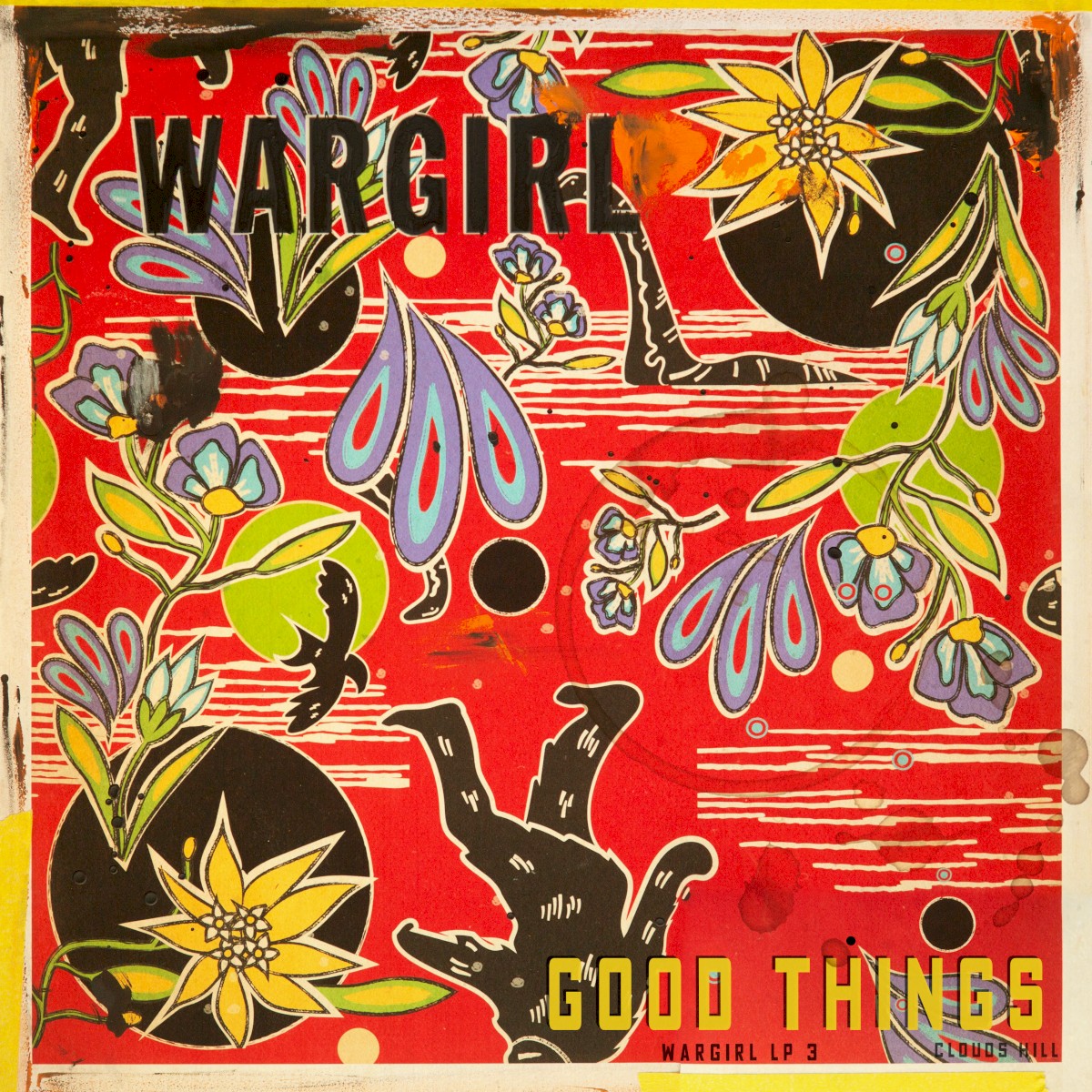
The quick read on Wargirl is almost too available. Here is a band whose record can be pushed, lazily and efficiently, into the streaming-service drawer marked retro cool: crate-dug rhythm parts, sun-warmed funk, dubby space, a bit of psych, a bit of post-punk stiffness, enough group-vocal lift to stop the whole thing becoming a tasteful exercise. Good Things practically invites the first-pass vocabulary. You can hear the bass being asked to carry more argument than the guitar. You can hear percussion doing the social work. You can hear old forms being handled with new-platform confidence, all those cleanly defined parts that make a song legible before the listener has decided whether to care.
That is the trap, though. Calling Wargirl a revival band explains the clothes and misses the walk. The more useful question is whether Good Things turns its references into structure, or whether it merely arranges them into a handsome surface. There is a difference between music that knows its sources and music that knows what to do with them. The former can be pinned to a moodboard. The latter moves.
The album’s first method of reaching a listener is physical, not intellectual. It enters through a bassline, a dry snare, a clipped guitar figure, a voice that often behaves less like a star turn than another rhythmic object in the room. That matters because Wargirl’s songs do not ask for the museum treatment. They are built for partial attention before they reward closer attention: the first half-heard play in a kitchen, the algorithmic nudge between two adjacent-but-not-identical bands, the bar speaker doing its democratic flattening at 9pm. I do not mean that as a downgrade. A lot of contemporary groove music lives or dies by whether it can survive those routes without becoming wallpaper.
On “Mess Around”, the title tells you the danger and the charm. The song works by refusing to over-explain itself, locking into a bass-and-drum pocket that feels more like a premise than a backdrop. The guitar scratches at the edge rather than claiming the centre, and the vocal hook has the useful bluntness of something designed to be remembered after one pass. “How You Feel” is more elastic, letting its rhythmic emphasis pull against the melody so that the song’s brightness has a little drag in it. When Wargirl are good, they understand that groove is not the same as looseness. The best playing here is disciplined, almost severe, with decoration kept on a ration.
The title track, “Good Things”, makes the album’s populist case most cleanly. Its pleasures are not hidden: a firm pulse, a chorus that opens without inflating, texture that gleams without getting laminated. There is polish here, and thank God. The old reflex that rough edges equal truth has ruined enough conversations. Wargirl’s cleaner surfaces do not make the songs less credible; they make their decisions easier to hear. The question is whether those decisions keep accumulating across the record, or whether the album’s well-lit rooms start to look too similar.
This is where context begins to interfere with listening, or claims to. Wargirl’s sound carries associations before any one track has finished: Afrobeat-adjacent repetition, funk’s faith in the bassline, dub’s sense of negative space, psych’s colour wash, post-punk’s fondness for clean angular pressure. None of those terms is false, exactly. None is sufficient. They can make the music easier to circulate, because a listener knows where to put it. They can also make the music easier to underrate, because once a record has been called eclectic the word starts doing unpaid labour.
On Good Things, the associations change the story around the songs more than the songs themselves. “Dancing Gold” is not persuasive because it gestures towards a crate of older dance records; it is persuasive when the arrangement keeps its shimmer in motion, when each part seems to have been placed according to pressure rather than taste. “No Difference” has a leaner, more tensile appeal, with the rhythm section doing the heavy lifting and the melody refusing the easy release that the groove seems to promise. In those moments, the references function like tools. They shape weight, spacing and attack.
Elsewhere, the wrapper shows. “Sass Girl” has attitude in its title and in its rhythmic stance, but the song leans so heavily on recognisable signals that its personality feels pre-approved. A guitar stab here, a vocal chant there, a little percussive bustle to imply communal heat: these are not crimes. They are also not enough. The issue is not derivativeness as such. All pop music is derivative if you zoom out far enough and are boring enough about it. The issue is whether a familiar cue has been made necessary by the song. At times Wargirl make necessity out of inheritance. At others, they make a very good-looking room.
More precise than revival, less strange than advertised
The sharper description of Good Things is this: Wargirl write groove-led songs in which the bass often behaves as the melodic lead, the guitars act as percussion, and the vocals supply colour, command and hook in roughly equal measure. The arrangements favour clarity over sprawl. Parts arrive quickly and usually stay in their lanes. This gives the album its immediate usability, but also sets a ceiling on surprise. Once a track has established its pocket, Wargirl are more likely to refine it than disrupt it.
That refinement can be satisfying. “Arbolita” gains from its light touch, with the rhythmic details placed carefully enough that the song never has to plead for vibrancy. “Voice of the Mountain” stretches the album’s palette without abandoning its centre of gravity, suggesting that Wargirl are most compelling when they let atmosphere press against the groove rather than simply decorate it. The vocals across the record are strongest when they resist melodrama. They often land as short phrases, communal prompts, or clipped melodic shapes. It is a smart choice: long-lined soul belting would smother this music. Wargirl’s restraint keeps the tracks nimble.

The limitation is structural. Several songs are better at establishing a feel than developing an argument. The middle passages can blur, not because the playing is weak, but because the writing sometimes treats the groove as a destination. A bridge will arrive without changing the emotional temperature. A chorus will repeat a phrase that sounds better as texture than as thought. “2069”, with its suggestive title and forward tilt, hints at a stranger record, one more willing to let its borrowed languages mutate. Instead, it mostly folds that promise back into the band’s established method.
This is not a plea for novelty for its own sake, although I have made that mistake before and will almost certainly make it again. A record does not need to explode its own frame to matter. But Good Things is so fluent in its chosen vocabulary that the moments of over-familiarity feel less like homage than caution. You can hear a band capable of sharper turns choosing the smoother road.
Strip away the playlist tags, the retro shorthand, the imagined record-shop genealogy, and Good Things remains a pleasurable, well-made album with a handful of tracks that justify more than casual use. Its strongest songs convert reference into arrangement. They understand groove as tension, not comfort. They know that a hook can be rhythmic before it is melodic, and that polish can sharpen rather than dilute a band’s character.
Its weaker moments depend too much on the listener completing the picture: you recognise the palette, supply the cool, accept the vibe as meaning. That will work for many people, and not dishonestly. Wargirl are good at atmosphere. They make music that travels cleanly through the messy ways music now reaches us, through recommendations, rooms, half-attention, repeat plays that begin accidentally and become deliberate. But the route into the listener’s life does not transform every song. Sometimes it only frames it more attractively.
So the verdict sits in the gap between mood machine and durable songbook. Good Things is better than revival shorthand, because Wargirl’s best arrangements have purpose and snap. It is also less singular than its surface fluency might suggest. The album matters most when the band make inherited cues feel like present-tense decisions. When they do, the groove has consequence. When they don’t, the good things are still good, just not quite enough.