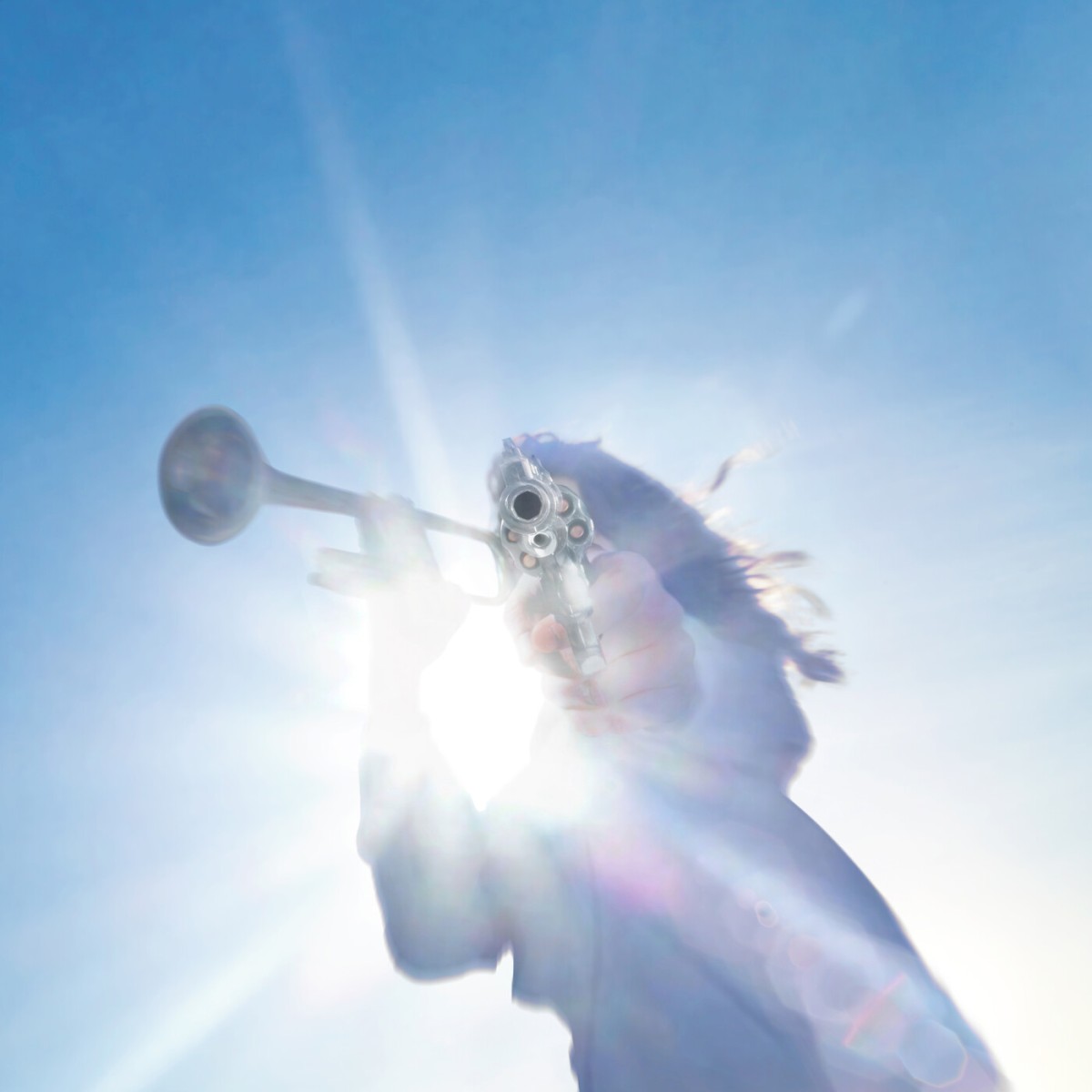
The first reading of Getting Killed is not stupid. Geese make records that invite the word “too” to get its coat on early: too febrile, too pleased with their own contortions, too willing to let a song rear up on its hind legs when a walk would do. Their appeal has often been described as a young band’s appetite for extremity, the sense that a piece may at any moment stop being a song and become a dare. On Getting Killed, that impression is available within minutes. Guitars scrape rather than merely ring. Rhythms lurch, tighten, and lurch again. The singing frequently sounds less like confession than like a man giving evidence under poor lighting.
So yes, the consensus has material to work with. This is not a polite guitar record in a season of polite guitar records. It has no interest in being tastefully bruised. After 3D Country, where Geese discovered how much room there was between post-punk spasm and deranged Americana, Getting Killed can sound at first like the band have chosen to live in that room without opening a window. The received idea will be that this is their noise record, their abrasion record, their record of youthful overstatement. One can already see the adjectives queuing up: feral, ragged, unhinged. Critics love a word that does half the listening for them.
The trouble is that the album keeps refusing to behave like an accident. Its unruliness has an unnerving amount of poise. The question, then, is not whether Getting Killed is chaotic. It plainly is, in places. The question is whether its chaos is the subject or the method.
Listen past the surface violence and the songs are often stricter than they first appear. “Taxes”, one of the record’s bluntest provocations, does not simply thrash about in search of a climax. It works by withholding the obvious release, setting up a groove that seems about to collapse into comic exaggeration, then making the repetition do the work. The guitar parts bite in short, ugly phrases. The drums do not decorate the frenzy so much as fence it in. Even the vocal performance, with its elastic slips from sneer to exclamation, is less random than theatrical. It knows where the exits are.
That distinction matters. A great many modern guitar records gesture towards breakdown, as if disorder itself were proof of vitality. Geese are more interesting because they keep putting breakdown inside recognisable shapes. “Trinidad” moves with the ungainly confidence of a song that has misplaced its centre of gravity, but its sections are cleanly staged: pressure, slackening, renewed pressure, then a kind of cracked procession. The band’s gift is not merely for sounding as though everything is coming apart. It is for making the listener notice how carefully everything has been allowed to come apart.
The title track plays a similar game with density. Its heavier moments are not just louder, although loudness is certainly among the album’s democratic pleasures. They arrive as changes in weight. A thin, needling part will sit exposed for long enough to become irritating, then the arrangement thickens around it, not in a heroic surge but in a sour accumulation. The production helps. It favours texture over polish: dry impacts, splintered guitar tones, airless corners in which the voice can rattle around. Yet it is not murk. The record’s abrasions are legible. You can hear the joins, which is to say you can hear the decisions.
“Husbands” and “Cobra” are especially good tests of the album’s discipline, because both flirt with self-caricature. The former has the air of a song trying on menace in front of a mirror, while the latter coils around figures that could easily become mere post-punk business. In both cases the band are saved by pacing. They understand that volatility needs intervals. A shout means little if the song has been shouting since it entered the room. Geese leave gaps, let phrases hang, allow a riff to repeat beyond comfort and then cut it off before it turns into wallpaper. Restraint, oddly enough, is one of their more dependable instruments.
The singing is central to this. Geese’s vocalist has a habit of treating the line between performance and possession as a bureaucratic inconvenience. On a lesser record, that would become exhausting quickly, a catalogue of tics presented as intensity. Here the voice often functions as the album’s unstable lead instrument, worrying at the metre, stretching vowels into absurd shapes, then snapping back into phrasing that is almost conversational. It gives the songs a comic edge, though not a cosy one. The comedy is closer to panic noticing itself in a shop window.
There are moments when Getting Killed believes too much in its own contortions. The record’s weakest passages are not the loudest or ugliest, but the ones in which ugliness becomes a signboard. “Au Pays du Cocaine” has a title that rather announces its appetite for outrageousness, and the music can feel similarly eager to be caught misbehaving. A jagged part will arrive where a stranger one was needed, or a vocal explosion will underline a point the arrangement had already made. The album is not above mugging.
Nor does every sprawl justify its floor space. When Geese stretch a song past the point of conventional resolution, the result can be thrilling, but it can also expose the difference between development and persistence. “Islands of Men” has passages where the band’s refusal to settle feels purposeful, even queasy. Elsewhere, the same instinct can produce drag. You begin to admire the nerve while wondering whether admiration is what the track was after. That is rarely a good sign.
There is also a theatrical self-awareness here that will divide listeners for good reasons. Geese do not stumble into grotesquerie. They arrange it, light it, and make sure you have noticed the stains. At times the record seems to anticipate the accusation of excess and answer by doubling down, which is not always the same thing as deepening. One need not ask a band this perverse to become modest. Modesty would probably kill them, and then the paperwork would begin. But a few passages mistake escalation for consequence.
Still, these failures are instructive. They show how narrow the album’s achievement is. Getting Killed works when excess is organised into tension. It falters when excess merely presents itself, hands on hips, waiting to be applauded for arriving.
The point of instability
The instability on Getting Killed is not decorative. It produces a particular kind of attention. These songs make the listener lean forward, not because they are obscure in the old progressive sense, or because they hide cleverness behind difficulty, but because their emotional temperature is constantly being renegotiated. A passage that seems comic becomes threatening. A groove that seems brutish reveals a sly internal logic. A vocal outburst that first registers as insolence begins to sound like someone trying to keep language from failing him.
That makes the record more than an exercise in abrasion. Its volatility is expressive, theatrical, funny and unnerving, often within the same minute. The band’s best trick is to refuse the settled mood. “Bow Down” takes the posture of command and makes it unstable, turning swagger into something closer to a nervous system. “Half Real”, true to its title, seems to inhabit the border between statement and hallucination, with the arrangement pulling the song in competing directions without losing the thread. These are not jams dressed up as songs. They are songs designed to sound as if the dressings may come loose.

One hears old ghosts, of course. Captain Beefheart hovers whenever a rock band makes awkwardness sound rehearsed. The Birthday Party is never far away from any young group that discovers the erotic possibilities of bad weather. There are also traces of the Stones at their most rancid and elastic, though Geese lack, perhaps blessedly, the older band’s imperial entitlement. Such comparisons are useful only to a point. The important thing is that Geese are not borrowing chaos as style furniture. They are using it to dramatise strain: social, bodily, musical, whatever name one cares to give the pressure when the record itself is more convincing than the diagnosis.
This is where my own suspicion of mess has to be watched. Age teaches a listener to prize control, sometimes too readily. A band that sounds chaotic but proves disciplined can become dangerously flattering to the critic, who gets to enjoy the racket while congratulating himself on detecting architecture. Even so, Getting Killed keeps earning that reading. Its disorder has consequences. Its jokes leave bruises. Its violence is shaped.
Unruliness with a job to do
Getting Killed will be easy to overpraise in the usual ways and easy to underrate in the equally usual ones. Call it a glorious mess and you miss the rigour. Call it mannered and you miss the risk. The record’s achievement lies between those errors. Geese have made an album that sounds as if it might bolt at any moment, while repeatedly proving that the bolting has been choreographed.
Not everything lands. Some gestures are too pleased with their own grotesque outline, and some stretches could have lost a minute without losing their soul. But the force of Getting Killed comes from the way it turns abrasion into argument. The band do not merely make a racket and wait for youth to justify it. They pace the racket. They frame it. They let it mean something before they let it fall apart.
The interesting fact about Geese, then, is not that they are unruly. Plenty of bands are unruly, especially before the invoices arrive. The interesting fact is that they increasingly know what unruliness can carry: dread, comedy, momentum, refusal, the absurd dignity of holding a song together while pretending not to. On Getting Killed, chaos is not a lack of control. It is the form control takes when calm would be a lie.