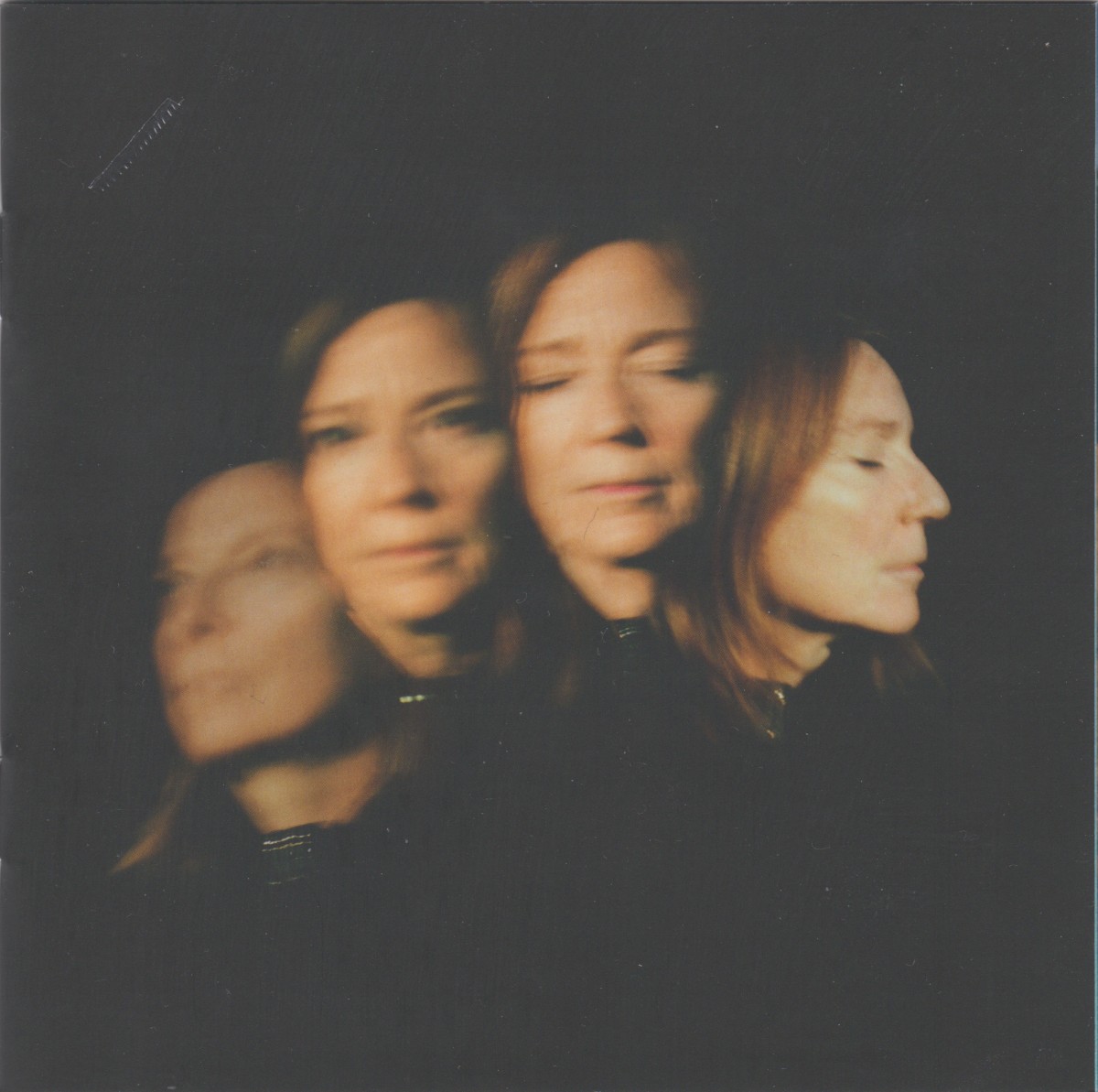
The easiest way to mishandle Lives Outgrown is to call it what the trade language will insist on calling it: Beth Gibbons’s first proper solo album, arriving after an age of silence, a belated personal statement from an artist long fixed in the public mind. That framing is tidy, marketable, and mostly beside the point. It suggests release, disclosure, a clearing of the throat. What Gibbons has made instead is a record of compression and refusal, one whose authority comes from how little it cares for those consolations.
The album works because it declines reinvention. There is no obvious bid here to update her sound, no grand claim to modern relevance, no sentimental effort to cash in accumulated myth. Its power lies in austerity, in the pressure it puts on sparse materials, and in the way unease is allowed to harden into form. This is not the sound of an artist announcing herself anew. It is the sound of someone treating age, grief and the thinning of certainty as compositional facts.
That distinction matters. Popular criticism tends to greet records by older artists with one of two lazy enthusiasms: the “return to form” notice, which flatters the past, or the “surprisingly contemporary” notice, which flatters the present. Lives Outgrown asks for neither. It is severe where many records in its position would be expansive. It admits diminished energy and narrowed means, then builds from them. If one wants a useful category, late style will do, but only if the phrase is rescued from its usual haze of prestige. What is audible here is not wisdom in the abstract but hard limitation made productive.
You hear that method first in the album’s pacing. The songs do not rush to establish mood and then luxuriate in it. They edge forward warily, often on patterns that feel less like grooves than like conditions to be endured. Repetition on Lives Outgrown is not hypnotic in the easy sense. It worries at the same figure, the same interval, the same low pulse until the listener begins to feel time as friction. Silence, too, is used less as drama than as a kind of moral pressure. Gaps open up in these arrangements and are left unfilled. They do not promise catharsis. They measure its absence.
That is one reason the album escapes the atmospheric branding that has trailed Gibbons for much of her career. Mood is present, obviously, but it is not the point. The point is structure, how these songs are made to carry unease without dissolving into vagueness. On tracks such as “Floating on a Moment” and “Rewind”, the arrangements seem to gather themselves from brittle percussion, dry strings, plucked or struck details, little patches of grain and air. They are handsome enough, but they are not there to flatter the singer. They keep abrading the line.
Gibbons’s voice is the decisive instrument, and the record is intelligent about what age has done to it. Or perhaps what age has clarified in it. She has never been a singer of abundance. Even in younger years the drama came from strain, from the pressure between composure and breakage. Here that pressure is less theatrical and more binding. She often sings as if testing how little force a phrase can bear and still remain standing. Notes are approached cautiously, then left before they can bloom. Melodies withhold the expected release; they turn back on themselves, flatten, or simply stop. There are moments when a less serious record would have arranged a swell beneath her and called the result transcendence. Lives Outgrown prefers the starker choice of leaving the wound exposed.
“Lost Changes” is exemplary in this respect. Its movement is patient to the point of discomfort, with Gibbons sounding less like a narrator guiding us through grief than a figure caught within it, trying to state plain facts while the ground shifts under the syntax. Elsewhere the songs rely on ostinato and recurrence rather than development in the conventional pop sense. They deepen by accumulation, by the ear’s growing awareness of what has not been granted. One hears this in the album’s handling of timbre. Instruments arrive as textures before they arrive as statements. A string part may scrape rather than soar. Percussion can feel ritualistic, but not grand. There are passages where the record seems almost to recoil from beauty just as it nears it.
That recoil is the source of much of its emotional force. Many albums about grief mistake articulation for depth, as though naming pain with sufficient solemnity were enough. Gibbons and her collaborators are after something tougher. The songs are arranged to keep sentiment under suspicion. Even when the music opens out, there remains some rough edge, some rhythmic awkwardness, some unresolved harmonic stain. The effect is not chilly. It is exacting. One begins to understand the album less as a set of confessions than as an argument about what feeling sounds like after the age of grand declarations has passed.
A few listeners will find the record too uniform in its discipline, and there are stretches where its restraint verges on inhibition. But the uniformity is deliberate, part of the album’s refusal to provide the bright differentiations of a conventional singer-songwriter showcase. It asks to be heard whole, as a sequence in which variations of pressure matter more than isolated set pieces. The result is immersive in a severe way, not because the album wraps the listener in atmosphere, but because it narrows the room.
Gibbons enters this record with a public image already overdetermined. For many listeners she will remain, first and last, the voice of Portishead, and there is no use pretending otherwise. That history provides orientation, especially for ears trained to hear in her singing a certain kind of nocturnal intensity. Yet Lives Outgrown is diminished if heard mainly as a footnote to that catalogue, whether as departure from it or confirmation of it. The trip-hop shorthand is of little use here. This album has a different patience, a different relation to drama, and a much more exposed faith in arrangement as moral design.
It is worth remembering that Gibbons’s strongest work has always depended on restraint as much as expressiveness. The common account made a fetish of atmosphere and melancholy, as if style itself were the event. What that account missed was the precision with which tension was organised. Lives Outgrown extends that precision into a more austere register. It does not try to recover any earlier glamour. If anything, it strips away the surfaces that once made the emotion appear cinematic. What remains is tougher, and in places less immediately seductive.
This is where late style becomes more than a flattering label for an artist who has been around a long time. In popular music the term is often applied too loosely, as though age alone conferred gravity. Genuine late style has less to do with chronology than with a changed relation to finish, confidence and display. One hears it when an artist stops pursuing synthesis and begins to let contradiction remain audible. One hears it when works become barer without becoming simpler, when resolution is treated as suspect, when craft turns from elegance toward necessity.

By that standard, Lives Outgrown belongs in the lineage. Not because Gibbons has reached some culturally approved age of reflection, and not because elapsed years can be converted into depth by journalistic arithmetic. It belongs there because the album’s formal choices make diminished certainty central to the music. Its repetitions do not reassure. Its melodies decline to crown themselves. Its textures are often beautiful, but beauty arrives in the manner of weather, briefly and without entitlement.
There is, too, a seriousness here that popular music sometimes mistrusts unless it is delivered with spectacle. Gibbons offers none. The seriousness is in the calibration, in the patience with which these songs are tightened until they can hold contradictory feelings without collapsing into statement. Some of the album’s power comes from how uninsistent it is about being powerful. That can be misread as minor-key tasteful craft. It is nothing of the kind. The severity is earned, and occasionally a bit much. But one would rather have this than one more decorated exercise in significance.
What the Severity Yields
Lives Outgrown does not reveal itself all at once, and it does not entirely reward every demand one might place upon it. Its emotional force is real, though often oblique. There are passages where the album’s commitment to withholding leaves a song more admirable than piercing. A little more looseness, somewhere, might have made the whole thing less hermetic. But these are limits bound up with the record’s achievement, not defects imported from outside.
What it offers, repeatedly, is the rare feeling of hearing an artist accept the narrowing of options and turn that narrowing into shape. The severity is not a pose. It produces revelation by refusing the usual routes to it. On repeated listens the album gains weight rather than colour. Small decisions begin to tell: the way a phrase is left unresolved, the way an arrangement frays at the edges instead of swelling shut, the way Gibbons’s voice can sound both wounded and curiously impersonal, as though grief had become a climate.
That gives the record a durable kind of repeat value, one based less on immediate attachment than on the deepening recognition of method. It matters because so much contemporary seriousness in pop is performative, eager to be recognised as such. Lives Outgrown is serious in the older sense. It asks difficult things of form. It accepts that age may reduce certainty without reducing art. And it finds, within that reduction, a hard, unsentimental grace.