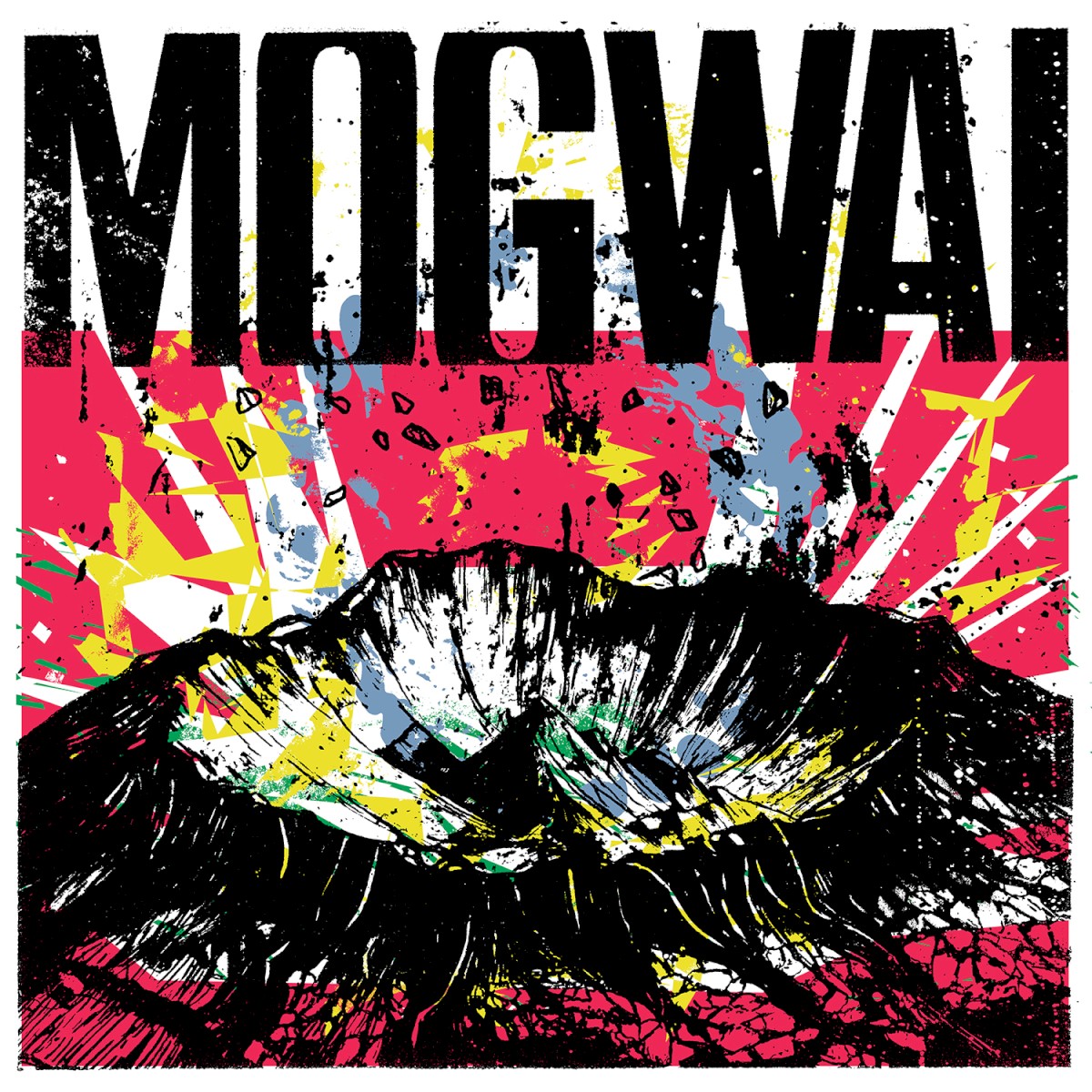
Mogwai are one of those bands whose reputation now arrives before the music and starts unpacking its bags. The common reading is tidy enough: the Scottish group long ago settled on a language of slow accumulation, bruised melody, distortion held in reserve until it becomes weather, and song titles that look as if they were retrieved from a pub conversation at closing time. Their strengths and limitations are presumed to be the same thing. You either admire the patience and scale, or you hear the machinery being wheeled into place.
The Bad Fire knows this problem, even if it does not address it with anything as vulgar as a manifesto. The question it raises is not whether Mogwai have discovered a new alphabet. They have not, and it would be odd to expect them to do so at this stage. The better question is whether a band can still generate pressure, feeling and surprise from a vocabulary that many listeners believe they have already mastered as consumers, if not as players.
The album both confirms the received view and makes that view seem a little lazy. It is recognisably Mogwai within seconds. It is also, at its best, a reminder that familiarity is not the same as exhaustion. A chord held a fraction longer than expected, a synth line allowed to glow rather than announce itself, a guitar part that thickens without turning into a victory lap: these are small decisions, but this music has always lived or died by small decisions arranged at large scale.
“Hi Chaos” opens the record with a useful act of misdirection. Its title promises disorder, but the track is built with considerable discipline, gathering weight through tone rather than simple escalation. Mogwai’s old loud-quiet-loud reputation, always a slightly crude summary of what they do, is less useful here than the idea of pressure control. The sound does not simply move from hush to detonation. It condenses. The guitars arrive as mass, the rhythm section keeps the floor under the thing, and the track finds drama in density rather than in surprise.
That is the album’s governing method. “God Gets You Back” places its pulse early and lets the song’s surface mutate around it. The processed vocal element, less a lead line than a human trace caught in the circuitry, gives the track a strange middle distance. It is neither purely instrumental abstraction nor a conventional song. Mogwai have used voices like this before, as colour, as ghost, as another instrument slightly embarrassed by the job description. Here it works because the arrangement does not ask the voice to carry more meaning than it can bear.
“Fanzine Made of Flesh” is more openly melodic, and the title’s grotesque little joke is undercut by the elegance of the music. One of the pleasures of late Mogwai is the way beauty appears without pleading for recognition. The track does not bloom into sentimentality. It keeps a certain grey weather around the edges, which suits the band. There are groups that make transcendence sound like a holiday brochure. Mogwai, bless them, tend to make it sound like a light left on in a municipal building.
The record’s pacing is also sharper than a casual glance at the band’s template might suggest. “Pale Vegan Hip Pain” and “What Kind of Mix Is This?” work as changes of angle rather than mere interludes between grander structures. The former has a clipped, unsettled quality, a reminder that Mogwai’s heaviness has never depended solely on volume. The latter plays with texture and placement, its title inviting the obvious engineer’s joke while the music itself worries away at balance and blur. “If You Find This World Bad, You Should See Some of the Others” gives the album one of its more expansive titles and one of its clearer demonstrations of melodic patience. It lets a phrase accrue significance through repetition, which is either the band’s great trick or its occupational hazard, depending on one’s mood.
By the time “18 Volcanoes” and “Hammer Room” arrive, the album has established a particular atmosphere: not bleak exactly, but scorched, alert, reluctant to console. “18 Volcanoes” leans into shimmer without becoming weightless. “Hammer Room” is more enclosed, as the name suggests, but its force is less blunt than the title implies. “Lion Rumpus” brings a rougher physicality, and “Fact Boy” closes with the kind of cumulative sadness Mogwai can still summon when they resist the temptation to overstate it.
There are passages on The Bad Fire where the sceptic is not wrong. Mogwai sometimes sound as if they are trusting the architecture to do too much of the emotional labour. A track begins in suspension, adds a figure, thickens the middle, opens the distortion valve, then leaves behind a noble afterimage. This is a good trick. It is also a trick one can learn to anticipate.
“Pale Vegan Hip Pain” is vivid in texture, but it does not quite escape the sense of being a necessary tightening of the album’s muscles rather than a fully compelling argument of its own. “Lion Rumpus”, for all its welcome bite, gives less back on repetition than the strongest pieces here. The title does some of the work the track might have done. That has been true of Mogwai before, and it is a minor occupational comedy in their catalogue: the names are unruly, the music often sternly behaved.
There is also a broader limitation in the album’s emotional palette. Mogwai remain masters of the weather system, less interested in the human figure moving through it. That refusal is part of their power, but refusal can harden into habit. When the band obscure the vocal presence, stretch the melodic line, or bury drama inside texture, they are choosing a kind of dignity. They are also limiting the kinds of vulnerability the music can admit. I have a weakness for this sort of restraint, and I distrust that weakness in myself. Not every clenched fist is profound. Sometimes it is only clenched.
The album’s weaker moments do not fail spectacularly. They settle into competence, which is a more awkward problem for a band of this calibre. Mogwai know how to make these shapes. They know where the weight should fall, how long to withhold, when to let the guitars become a wall and when to leave the synths glowing in the corners. Craft can become camouflage. On parts of The Bad Fire, you hear the craft first.
What saves the album from becoming another capable instalment is the severity of its focus. The production has a hard, clean outline without sanding off the grime. Drums land with purpose, synths are allowed to be synthetic rather than prettified, and the guitars often arrive as grain and pressure instead of heroic release. This matters. A lesser version of this record would have inflated every climax until it resembled a trailer for its own seriousness. The Bad Fire is more disciplined than that.
“God Gets You Back” is the clearest example of the album’s success. Its repetitions do not feel like a band filling time. They feel like a band testing how much alteration a fixed pulse can withstand. The track’s emotional charge lies in that tension between motion and entrapment, the sense of something moving forward because it cannot do anything else. “Fanzine Made of Flesh” earns its beauty by refusing to isolate it from unease. “If You Find This World Bad, You Should See Some of the Others” stretches the album’s horizon without losing its grip on the ground. These pieces do not reinvent Mogwai’s language, but they remind you why the language became durable in the first place.
The sequencing helps. The Bad Fire does not simply stack peaks. It alternates density and space carefully enough that the louder passages retain consequence. This is an unglamorous virtue, and therefore easy to underrate. Many bands of Mogwai’s generation have mistaken scale for continuity, as if a long record of large sounds must amount to a journey. Here the movement feels considered. The album’s later tracks deepen the earlier ones rather than merely repeating them at a different tempo.
“Fact Boy” is a particularly telling closer because it does not try to solve the record. It gathers the album’s unease and lets it remain unresolved. Mogwai’s best endings have often understood that catharsis is not the only available dignity. Sometimes the more honest gesture is to leave the room with the amp still humming.
Repetition with consequences
The easiest thing to say about The Bad Fire is that Mogwai still sound like Mogwai. The more useful thing is to ask what that continuity now permits. For younger bands, repetition can look like a shortage of imagination. For veteran bands, reinvention is often demanded by listeners who would quietly resent it if delivered. We ask for surprise, then punish the loss of recognisable virtues. Critics are especially bad for this, and I include myself among the accused.
The Bad Fire is not a reinvention. It is not even a dramatic late-career swerve. Its success is closer to reaffirmation, though that word can sound too pious for music with titles this daft. The album argues that a settled style need not be a dead one, provided the players still understand the difference between method and formula. Mogwai do, most of the time. When they do not, the record becomes merely solid. When they do, it has a force that cannot be reduced to nostalgia for earlier shocks.
The consensus persists because it contains truth. Mogwai’s grammar is long settled. The Bad Fire does not deny that. It tests how much feeling can still pass through it, and the answer is: more than one might have expected, if one had arrived armed only with the old verdict. Familiar tools, used with this much precision, can still draw blood.